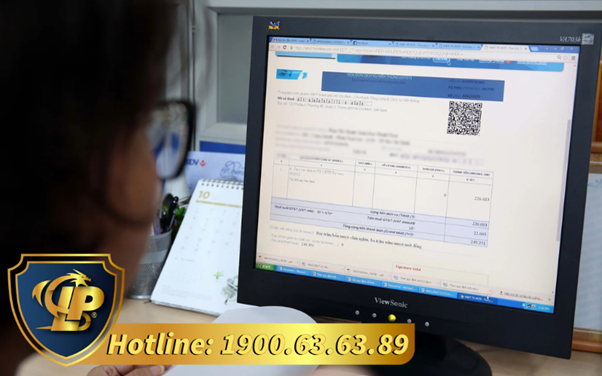
Guidelines on Using Trade Names with Product Codes on Electronic Invoices is crucial content that enterprises must pay special attention to in order to ensure legality, transparency, and consistency in accounting and tax activities. Correctly displaying trade names attached to product codes not only helps management agencies easily inspect and cross-check but also limits the risk of tax imposition or administrative penalties. The following article by Long Phan Consulting Company will provide specific guidelines on principles, methods, and legal notes when using trade names with product codes on electronic invoices according to current regulations.
Guidelines on Using Trade Names with Product Codes on Electronic Invoices.
Instructions on using trade names with product codes on electronic invoices.
Based on regulations at Point a, Clause 6, Article 10 of Decree 123/2020/ND-CP, amended and supplemented by Point b, Clause 7, Article 1 of Decree 70/2025/ND-CP, regulations on trade names accompanying product codes on electronic invoices are as follows:
Language and Detail: The invoice must show the names of goods and services in Vietnamese. In cases of selling goods of many different types, the name of goods must show details for each type (e.g., Samsung phones, Nokia phones; food items, drinks; etc.).
Goods with Registration Rights: In cases where goods require registration of usage rights or ownership rights, the invoice must show the specific numbers and symbols of the goods required by law during registration.
Example: Chassis number, engine number of cars, motorcycles; address, house level, length, width, number of floors of a house, etc.
Transport Services: In cases of transport service business, the invoice must show the transport vehicle license plate and the itinerary (origin – destination).
Digital Platform Transport/E-commerce: For transport businesses providing freight transport services on digital platforms or e-commerce activities, the invoice must show the name of the transported goods, and information on the name, address, tax code, or identification number of the shipper.
Foreign Language Usage: If it is necessary to add foreign words, the foreign words must be placed to the right in parentheses ( ) or placed immediately below the Vietnamese line with a smaller font size than the Vietnamese text.
Codes: In cases where the traded goods or services have regulations on goods/service codes, the invoice must record both the name and the code of the goods/services.
Technical standards on electronic invoice formats are prescribed in Article 12 of Decree 123/2020/ND-CP and amended/supplemented by Clause 9, Article 1 of Decree 70/2025/ND-CP, including the following criteria:
XML Standard: The e-invoice format is the technical standard defining data types and data length of information fields serving the transmission, storage, and display of e-invoices. The e-invoice format uses the XML (eXtensible Markup Language) text format language.
Components: The e-invoice format consists of two components: the component containing e-invoice business data and the component containing digital signature data. For e-invoices with a tax authority code, there is an additional component containing data related to the tax authority code.
Data Structure Authority: The General Department of Taxation builds the component containing e-invoice business data and transmission methods with tax authorities. specifically for VAT invoices combined with tax refund declarations, the General Department of Customs builds the business data component for contents intended for customs authorities and commercial banks acting as tax refund agents.
Direct Connection Requirements: Organizations and enterprises selling goods or providing services, when transferring e-invoice data to tax authorities via direct submission, must meet the following requirements:
Connect with the General Department of Taxation via a leased line or MPLS VPN Layer 3 channel, including 1 main channel and 1 backup channel. Each channel must have a minimum bandwidth of 5 Mbps.
Use Web Service or Message Queue (MQ) with encryption as the connection method.
Use SOAP protocol to package and transmit/receive data.
Display: E-invoices must fully and accurately display the invoice contents, ensuring no misleading interpretations so that the buyer can read them by electronic means.
Regulations on the format of electronic invoices
Prohibited acts in the field of invoices and documents.
Article 5 of Decree 123/2020/ND-CP, amended by Clause 4, Article 1 of Decree 70/2025/ND-CP, specifically lists violations of the law in tax and invoice management, including:
For Tax Officers:
Causing trouble or difficulties for organizations and individuals buying invoices or documents.
Covering up or colluding with organizations and individuals to use illegal invoices or documents.
Taking bribes during inspections or examinations regarding invoices.
For Taxpayers and Related Parties:
Committing fraudulent acts such as using illegal invoices, illegally using invoices; falsifying invoices or documents to perform illegal acts.
Obstructing tax officers in the performance of their duties (specifically acts harming the health or dignity of tax officers during inspections).
Unauthorized access to, falsification of, or destruction of the information system regarding invoices and documents.
Giving bribes or performing other acts related to invoices and documents for illicit gain.
Failing to transfer electronic data to tax authorities as prescribed in Decree 123/2020/ND-CP.
Long Phan Consulting Company provides legal consulting services on tax management and electronic invoices.
Long Phan Consulting Company provides in-depth consulting services in the field of tax management and electronic invoices, supporting businesses in complying with legal regulations and effectively controlling tax risks. Our team has practical experience working with tax authorities and handling complex inspection cases. We structure our support into the following key area:
Comprehensive Review and Risk Management for Tax & Invoices
Support 1: Conduct a comprehensive review of the enterprise’s e-invoice management and usage process to assess tax compliance levels and detect early risk signs.
Support 2: Draft and perfect internal regulations on invoice and document management, clearly defining the responsibilities of each individual and department to strengthen internal control and prevent fraud.
Support 3: Advise or represent the enterprise in working with tax authorities regarding inspection conclusions related to e-invoices; support explanations, complaints, and petitions to protect the legitimate rights and interests of the enterprise.
Long Phan Consulting Company provides legal consulting services on tax management and electronic invoices.
Frequently Asked Questions
Below are some frequently asked questions about electronic invoices and taxes; please refer to them:
Is it valid to use only foreign languages for the names of imported goods on electronic invoices?
No. According to regulations, the names of goods and services on invoices must be in Vietnamese. Foreign words can only be used as additional notes (placed in parentheses to the right or placed directly below the Vietnamese text in a smaller font size), and cannot completely replace the Vietnamese text.
(Legal basis: Point a, Clause 6, Article 10 of Decree 123/2020/ND-CP, amended and supplemented by Point b, Clause 7, Article 1 of Decree 70/2025/ND-CP)
If the time of digital signature differs from the time of invoice creation, when should the invoice be submitted to the tax authorities?
In cases where an issued electronic invoice has a digital signature date different from the date of issuance, the date of digital signature and the date of submission to the tax authority for issuing a tax code (for invoices with a tax authority code) or the date of transferring electronic invoice data to the tax authority for electronic invoices without a tax authority code shall be no later than the next working day from the date of issuance (except for data submission according to the summary table specified in point a.1, clause 3, Article 22 of Decree 123/2020/NĐ-CP).
Legal basis: Clause 9, Article 10 of Decree No. 123/2020/ND-CP, amended and supplemented by point c, Clause 7, Article 1 of Decree No. 70/2025/ND-CP)
Which services are permitted to use a statement attached to the invoice?
Specific services for which a summary table is used include: electricity, water, telecommunications services, information technology services, television services, postal and delivery services, banking, securities, insurance (prepared according to a conventional period), medical examination and treatment services, and other cases as directed by the Minister of Finance.
(Legal basis: Point a, Clause 6, Article 10 of Decree 123/2020/ND-CP, amended and supplemented by Point a.3, Clause 7, Article 1 of Decree 70/2025/ND-CP)
Do individual customers buying gasoline and diesel fuel need to have their name and address written on the receipt?
No. For electronic invoices for the sale of gasoline and diesel fuel to individual customers who are not engaged in business, the following fields are not required: Name, address, tax identification number, and digital signature of the buyer.
(Legal basis: Point c, Clause 14, Article 10 of Decree 123/2020/ND-CP, amended and supplemented by Point d, Clause 7, Article 1 of Decree 70/2025/ND-CP)
Is a digital signature mandatory for invoices generated from a cash register?
No. Electronic invoices generated from cash registers connected to the tax authority do not require a digital signature.
(Legal basis: Clause 2, Article 11 of Decree 123/2020/ND-CP, amended and supplemented by point d, Clause 8, Article 1 of Decree 70/2025/ND-CP)
Conclusion
Compliance with regulations on trade names and product codes is a mandatory requirement to minimize tax inspection risks and ensure the validity of expenses. Clients need to review their invoicing processes to ensure synchronization with regulatory data.
Long Phan Consulting Companyis ready to support answering questions and optimizing accounting processes. Contact us immediately via Hotline 1900636389 to receive in-depth advice from our team of specialists.